
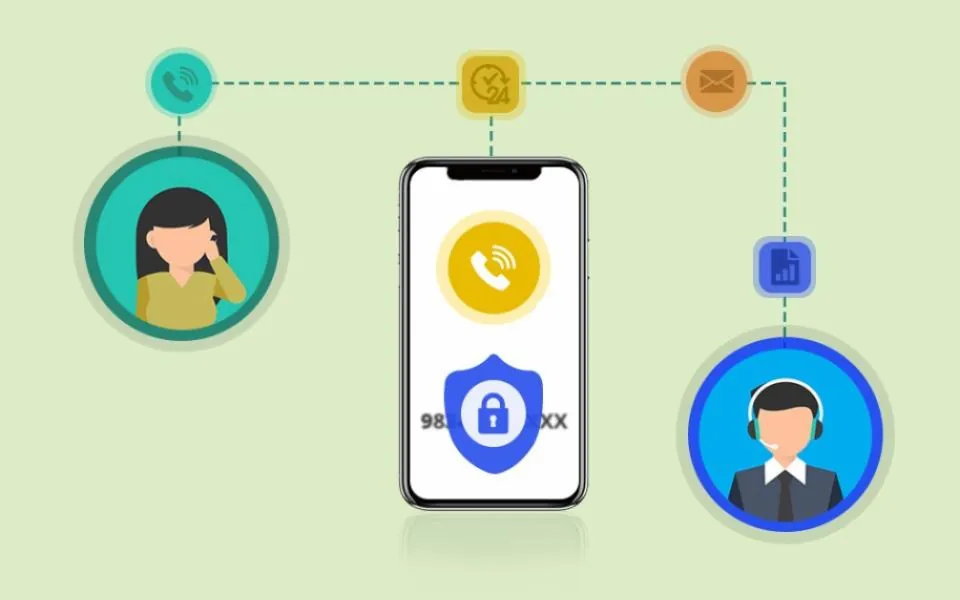
Masking phone numbers for customer privacy is a feature that protects individuals’ privacy by concealing their phone numbers when making or receiving calls. It is commonly used in customer service centers, online marketplaces and classified advertisement platforms. The primary purpose of number masking is to establish a secure communication channel between two parties while keeping their contact information private.
How phone number masking typically works
- Caller initiation — When a caller dials a designated number or starts a call through an application, the system assigns a unique virtual number to the caller.
- Number mapping — The virtual number is then mapped to the recipient’s actual phone number. This mapping is typically done in real time and is transparent to both parties.
- Call connection — The call is established between the caller and the recipient, with the virtual number as an intermediary. The recipient sees the virtual number on their caller ID instead of the caller’s actual number.
- Privacy protection — Throughout the call, the caller’s actual phone number remains hidden from the recipient, protecting their personal information.
Who uses number masking
Number masking is commonly employed by customer support centers, online marketplaces, ride-sharing services, classified advertisement platforms and dating apps, among others. It ensures smooth and secure communication between users while preserving their privacy.
Number masking solutions
- Call forwarding — Instead of displaying the customer’s actual phone number, set up call forwarding. When customers call, their calls are forwarded to your support team without revealing their actual numbers.
- Virtual phone numbers — Temporary phone numbers assigned to customers for communication. Virtual numbers act as intermediaries between customers and your support team, so customer privacy is maintained.
- Encryption — If you’re building software or a system that handles customer phone numbers, consider encrypting the data. Encryption ensures that even if an unauthorized person gains access to the data, they can’t decipher it without the encryption key.
- Access control — Limiting access to customer phone numbers is crucial for privacy. Make sure only authorized personnel who need the information for their roles can see customer phone numbers, and implement proper access controls such as user authentication and role-based access.
- Privacy policies — Clearly set out your organization’s privacy policies and make sure they comply with applicable laws and regulations. Inform customers how their phone numbers will be used, stored and protected, and obtain their consent for any necessary data processing.
Stay up to date
Remember, it’s essential to stay updated with the latest privacy regulations and best practices, so that your masking techniques remain effective and compliant with the law. Masking phone numbers for customer privacy is an important step in any dialer setup.
Want this running on your numbers?
Start with a free trial — no card, and every service on one account.