
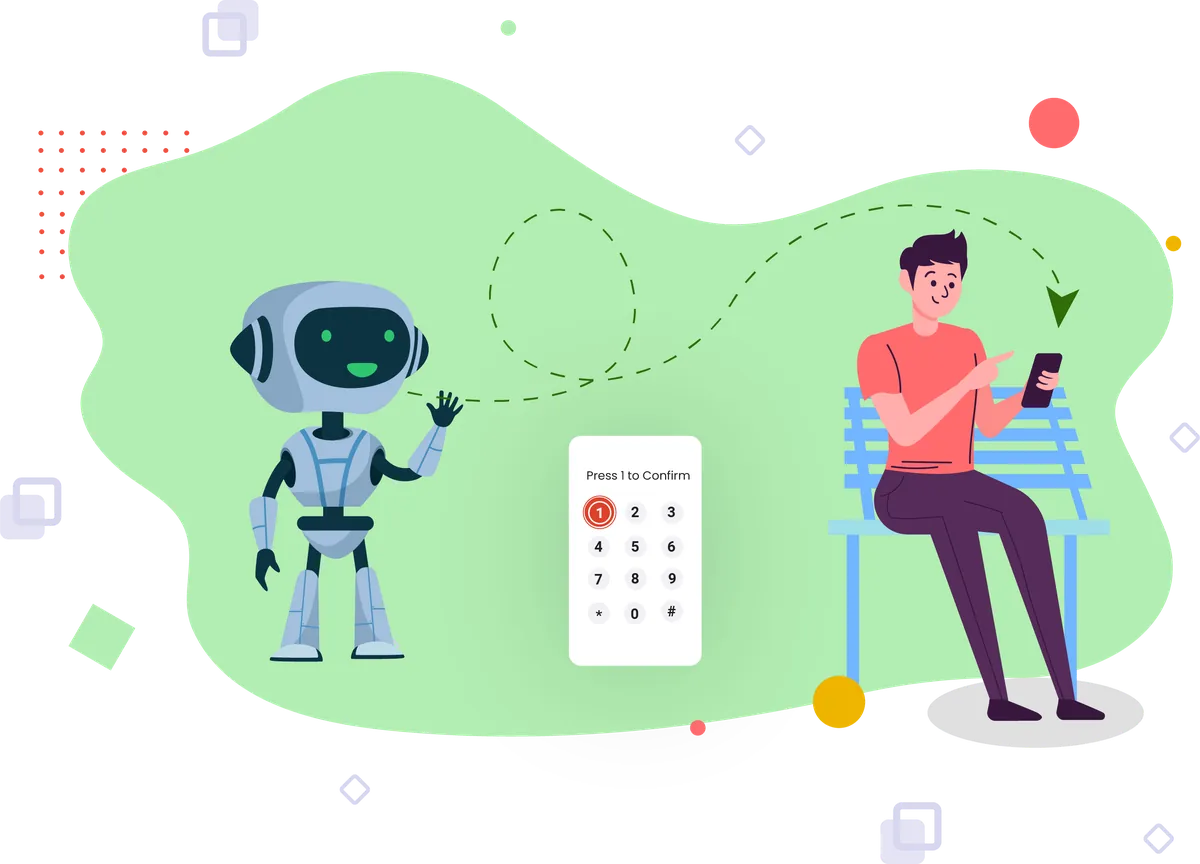
IVR provides a service that helps callers reach the correct business department and information. While IVR usually handles inbound calls, it also works proactively on outbound calls.
What is outbound IVR?
Inbound calls are incoming calls to a call centre from customers who want to discuss their requirements with an assistant. IVR calls are generally related to customer support or service enquiries, but they can also be sales or marketing calls to an IVR number. Inbound call centres need a team of executives or agents who answer every incoming call and help callers with their requirements and doubts. Inbound calling makes agents work efficiently and also enables 24/7 service support.
Inbound calls can be received through the mobile network and SIP lines as well. On the other side, some call centres have agents who make outbound calls to a database to connect with potential leads and convert them into deals; typically they also make outbound calls when they miss an inbound call. This is usually done to sell a company's product or service and generate sales.

Inbound vs outbound IVR: which one does your call centre need?
There are some differences between outbound and inbound IVR. Outbound IVR can reach customers across several channels:
- SMS texting
- Mobile app
- Social media
- Webchat
- Voice
Advantages of outbound IVR
- Cost reduction
- Improvement in IVR containment
- Saving agent time
- Strong bonding with customers
- Boosted agent efficiency
- Personalised interactions
What outbound IVR delivers
An outbound IVR places thousands of calls to your customer database in just a few seconds. It collects valuable feedback from customers, connects agents with customers, sends instant notifications to agents by SMS, and enables modern marketing with customised voice messages. In this blog we will learn more about what outbound IVR is and how it works.
How does outbound IVR work?
Outbound IVR connects with customers through a voice call or a digital messaging channel, then gives them options to reach an agent, take action or get information. Below is a step-by-step breakdown of the process.
1. It connects with the customer
To start outbound IVR, the phone system connects with the customer by voice, and sometimes also through SMS, social media or a mobile app.
2. The IVR flow engages with the customer
After connecting with the customer, the IVR flow begins. Many kinds of software help administrators create the flow. They use call trees to build menu options such as routing, dial-tone menus, self-service actions and call queues.
3. Gathering customer information
IVR gathers customer information from the menu options they select. Customers use IVR to provide a variety of information, such as:
- Language preference
- Identification and name
- Account number
- Password and PIN numbers
- Whom they would like to speak to
- Yes or no answers to custom questions
4. Providing self-service
In many cases, IVR can meet the customer's needs through self-service functions or built-in automations. It can provide information about a customer's account, book an appointment, reset a password, and pull information from the knowledge base or CRM.
5. Routing the call
IVR can handle many customer needs through self-service automation, but it can also route the call to an operator, a call queue or a live agent. The system chooses where to route calls based on several variables: language preference, agent availability, the caller's menu choices and agent skills. Using all of these, IVR routes the call to an available agent. The agent receives the IVR transcript, and the job of outbound IVR is done.
So now it's clear what outbound IVR is and how it works.
Conclusion
Outbound IVR is a strong tool that revolutionises how businesses communicate with their customers. Its ability to collect customer responses and deliver tailored messages makes it a valuable asset in today's competitive business landscape. By understanding what outbound IVR is and how it works, businesses can make the best use of this technology to enhance customer service, gain valuable insights and improve operational efficiency.
If you are looking for outbound IVR, Cloudshope Technologies Pvt. Ltd. offers a full-featured platform, and you can try it with a 7-day free trial before investing in our services.
Want this running on your numbers?
Start with a free trial — no card, and every service on one account.